(Image source from: Ndtv.com)
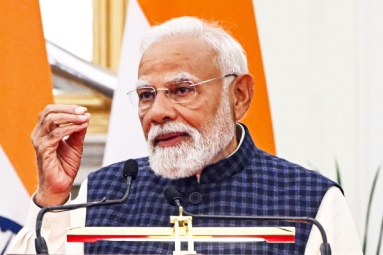
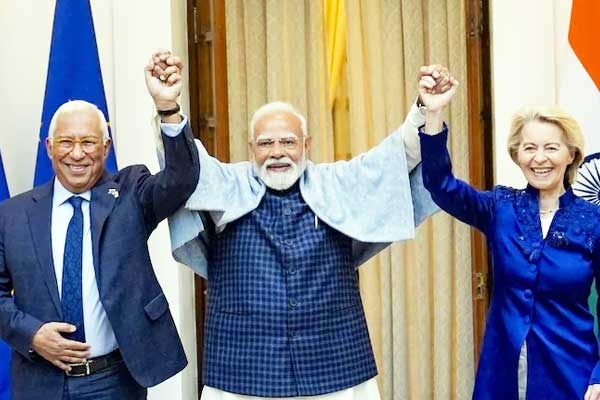
In a moment rich in meaning and strategic importance, India and the European Union on Monday were on the verge of finalizing a long-awaited Free Trade Agreement, as the President of the EU Commission and the President of the European Council joined Prime Minister Narendra Modi at the India-EU Summit after attending India's Republic Day festivities as honored guests. The mix of diplomacy, pageantry, and commerce has made New Delhi the setting for what could be one of the most significant trade agreements of this decade. If finalized today, this deal would conclude over twenty years of careful discussions and collaboration between two of the largest democratic markets in the world. India and the EU have been partners in strategy since 2004, built on shared democratic principles, collaboration in global matters, and a promise to a rules-based international atmosphere. However, their relationship dates back even further—to 1962—when India became among the first nations to create diplomatic ties with the European Economic Community, which was a predecessor to the EU.
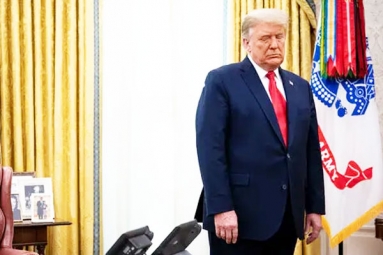
The timing is striking. The global economy is experiencing new challenges: the return of U. S. President Donald Trump to aggressive tariff policies has shaken markets, supply chains continue to be fragile, and the conflict between Russia and Ukraine has not yet been resolved. In this context, an India-EU FTA would send a powerful message supporting open, reliable, and varied trade during a time when economic nationalism is rising again. Economically, both sides are already closely connected. The EU is India's top trading partner in merchandise, with trade between them reaching around USD 136 billion in 2024-25, and there is also a steadily increasing trade in services. Over the past ten years, European businesses have increased their presence in India's manufacturing, clean energy, and digital fields, while Indian companies, from IT to pharmaceuticals, have expanded their reach throughout Europe.
Yet, despite this scale, both sides have long maintained that trade is still "below potential. " Formal talks for a wide-ranging FTA, investment protection agreement, and a deal on geographical indications restarted in 2021, with leaders aiming high to finalize them by the end of 2025. Ongoing ministerial meetings through 2025 and early 2026 have indicated a strong desire to close existing gaps. Diplomats describe the potential agreement as "balanced and forward-thinking," which would reduce tariffs, simplify regulations, open up service markets, and enhance supply chain resilience. For India, it holds the promise of better access to a market of 450 million consumers. For Europe, it provides a stronger foothold in one of the world's fastest-growing major economies. The FTA also serves as the economic foundation for a broader strategic alignment. In recent years, India and the EU have strengthened cooperation in areas like defense and maritime security, clean energy and climate initiatives, digital technologies, space exploration, and connectivity. The creation of the India-EU Trade and Technology Council in 2022, only the EU's second of its kind after the one with the U. S., recognized that trade, technology, and security have become interconnected.
Security collaboration has also picked up speed, with shared naval drills occurring in the Indian Ocean and a rise in discussions about working together in defense industries. When it comes to climate and energy, Europe has stepped up as an important ally in India's move towards renewable sources, green hydrogen, and eco-friendly city transport.
Connectivity is another vital aspect. The India-EU Connectivity Partnership and the ambitious India-Middle East-Europe Economic Corridor (IMEC) show a mutual goal of creating clear and sustainable infrastructure links across different regions. A free trade agreement (FTA) would provide these strategic efforts with a strong economic foundation. The fact that top leaders from the EU decided to be guests of honor at India’s Republic Day did not go unnoticed among diplomats. Recently, all EU Commissioners traveled to India together for the first time, highlighting the EU's increasing focus on New Delhi as a strategic ally beyond just trade. The invitation to Republic Day, officials suggest, aimed to convey that Europe considers India as not just a marketplace but a key component in its Indo-Pacific and global strategy.
At the summit, leaders are likely to present the FTA as a "forward-looking" agreement, supporting strong supply chains, reliable technologies, and sustainable development. This agreement is expected to be seen as a response to the unpredictability brought about by trade wars and geopolitical divides.
The negotiations have faced challenges. Issues related to market access in delicate sectors, environmental and labor standards, data sharing, and public procurement have previously hindered progress. However, officials from both sides express that the current geopolitical and economic climate has changed things. The need to reduce risks in supply chains that lean too heavily on one area and to maintain a rules-based trade system has added new urgency to the discussions. If the FTA is indeed confirmed today, it will signify not just the end of protracted negotiations but the start of a new chapter in India-EU relations, weaving together economics, strategy, and shared principles more closely than ever before. In a world marked by growing uncertainty, the handshake in New Delhi could have implications beyond Raisina Hill, symbolizing that two significant democratic nations are opting for cooperation instead of conflict and integration instead of separation.